Skipping tire rotations does not usually cause an immediate problem. The car can still steer normally, the tires hold air, and nothing on the dashboard tells you that one pair is wearing faster than the other. That makes rotation easy to put off.
Over time, though, each tire stays in the same position and keeps dealing with the same forces. Steering, braking, acceleration, vehicle weight, and alignment all affect the four corners differently. Eventually, tires that started with the same tread depth can look very different from one another.
The Front Tires Can Wear Out Much Faster
On many vehicles, the front tires do more work than the rear tires. They steer the car and handle a large share of the braking force. On a front-wheel-drive vehicle, they also have to transfer engine power to the road.
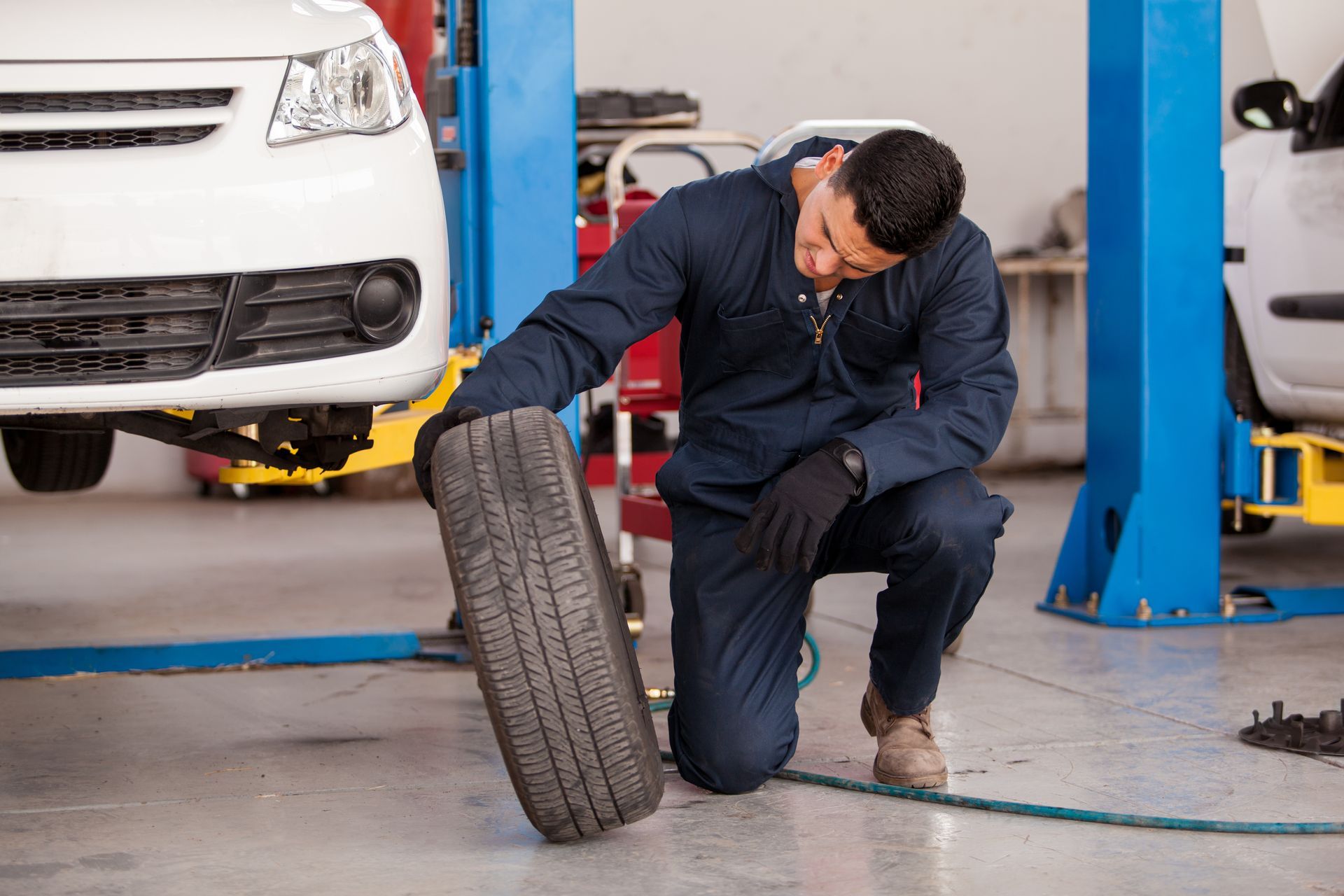
Leave those tires in place long enough, and the fronts can reach their wear limit while the rear pair still has plenty of tread remaining. At our shop, we see this most clearly on vehicles that have gone a long time without rotation. Moving the tires at reasonable intervals helps distribute that workload across the full set.
Uneven Tread Can Change How the Car Handles
A large tread difference between the front and rear tires can affect how the vehicle responds in turns and wet conditions. The axle with less available tread may lose grip before the other one.
That becomes more noticeable in rain, where tread depth helps move water away from the contact patch. A vehicle with heavily worn tires on one axle can feel less predictable when braking or changing direction on a wet road.
Some signs worth watching for include:
- One pair of tires looks noticeably more worn
- The vehicle feels different in wet turns
- Steering response has changed
- One tire develops more shoulder wear than the others
- Tread depths vary considerably around the vehicle
Rotation cannot correct a tire that is already worn beyond a safe level, so catching the difference earlier is much more useful.
Tire Noise Can Become More Noticeable
Tires do not always wear evenly across each tread. Certain positions can encourage feathering, shoulder wear, or cupping when alignment, suspension condition, or tire pressure is not right.
Once that pattern becomes established, the tire can start humming or producing a rhythmic road noise. Moving it later may change the sound, but it cannot put the missing rubber back.
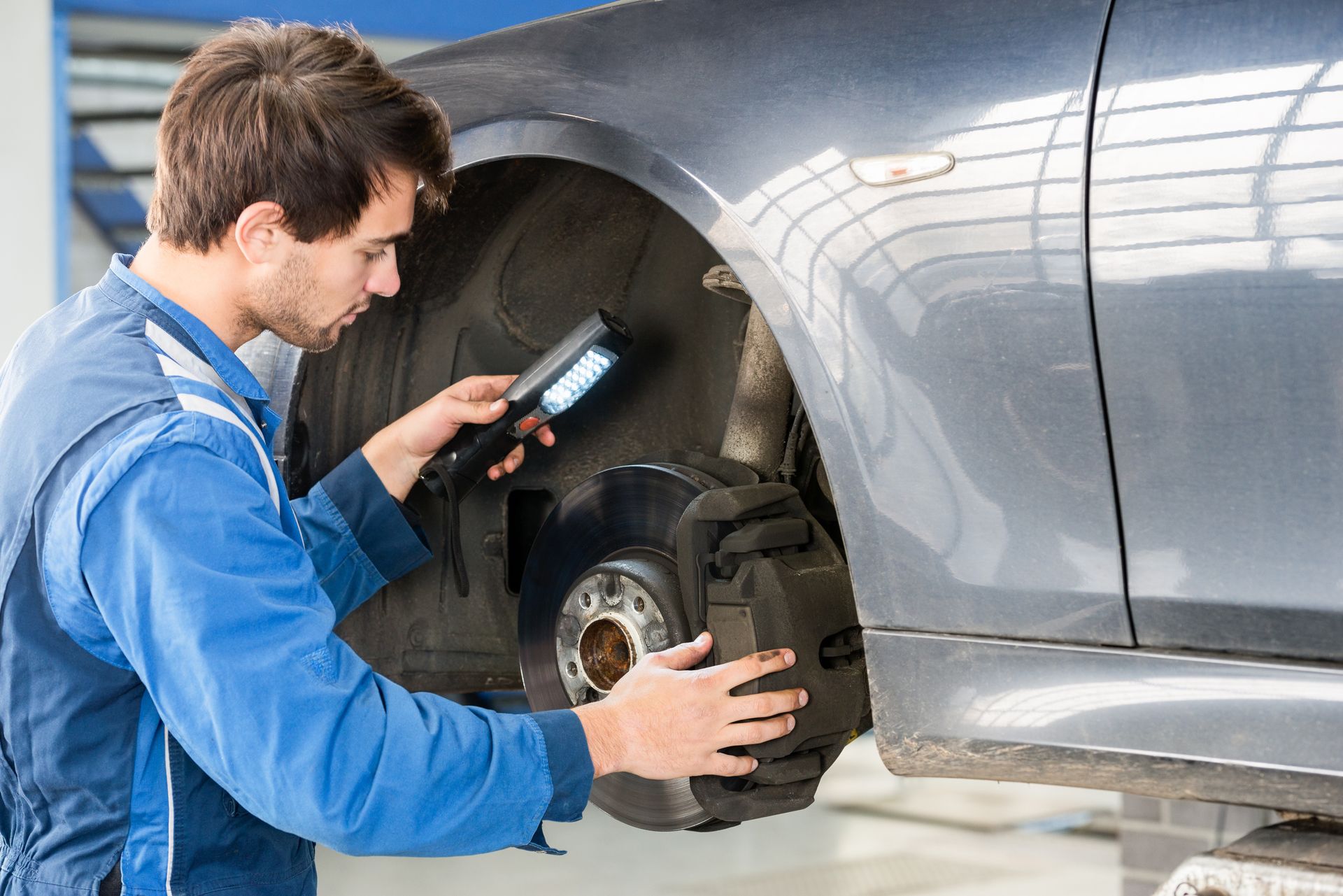
During an inspection, we run a hand across the tread and compare wear from one side to the other. If the pattern is severe, we look beyond rotation and check alignment, shocks, struts, wheel bearings, or other parts that may be contributing.
You May Replace Tires Earlier Than Necessary
One of the biggest disadvantages of never rotating tires is wasted tread life. If two tires wear out substantially earlier than the other two, you may end up replacing tires in pairs instead of getting more even use from the complete set.
That can complicate tire planning, especially when the remaining tires are somewhere between new and worn out. Keeping tread depths closer together makes it easier to get consistent performance from all four corners.
Regular maintenance gives us a chance to measure the tires instead of judging them only by appearance. A few tread-depth measurements can show a developing difference long before it is obvious from several feet away.
All-Wheel-Drive Vehicles Need Extra Attention
Tread differences deserve particular attention on many all-wheel-drive vehicles. As tires wear, their overall rolling circumference changes slightly. If one or two tires are much more worn than the others, the drivetrain can see a continuous speed difference between the wheels.
How much difference is acceptable depends on the vehicle manufacturer. Some AWD systems tolerate more variation than others, so we check the requirements before replacing only one tire or one pair.
Rotation helps keep tread depths closer together from the beginning. That can make tire replacement easier later and reduce the chance of ending up with a large mismatch across the drivetrain.
Rotation Will Not Fix an Alignment or Suspension Problem
It is important to know what tire rotation can and cannot do. Moving the tires helps distribute normal wear, but it will not correct a wheel that is pointed at the wrong angle or a worn suspension component that lets the tire move incorrectly.
If one tire keeps wearing on the inside edge, develops deep cupping, or loses tread much faster than the others, we want to know why. Simply moving that tire to another corner can spread the symptoms without fixing the cause.
That is why we look at the tread every time the tires are rotated. The wear pattern can tell us whether the vehicle needs more than routine tire service.
Get Tire Rotation Service In Newport, OR, With PJM Auto LLC
If your tires haven't been rotated in a long time, or one pair is wearing faster than the other, PJM Auto LLC in Newport, OR, can check tread condition and determine the proper rotation pattern for your vehicle.
Schedule a tire rotation before uneven wear takes usable miles away from the rest of the set.